
Bali Island geography tells a powerful story of natural beauty and cultural harmony. Located in the heart of Indonesia, Bali continues to attract people from around the world. Its unique landscape — with volcanoes, lakes, coastlines, and forests — creates the perfect setting for unforgettable moments. Whether you’re planning a wedding, spiritual retreat, or corporate event, the island’s natural features shape every experience in a special way. Let’s explore how geography plays a major role in Bali’s charm and makes it a top destination for meaningful celebrations.
Geographical Features of Bali: From Volcanoes to Coastlines
Majestic Mountains and Active Volcanoes
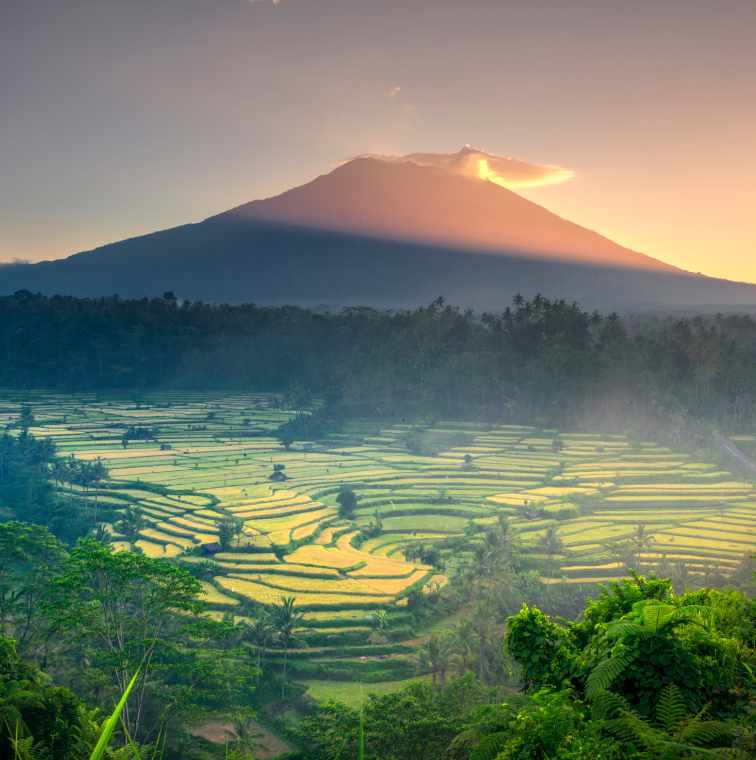
Bali’s central highlands define much of its identity. The most prominent peak is Mount Agung, often referred to as the island’s spiritual axis. Rising to 3,031 meters, this active volcano influences the island’s culture, climate, and farming. Other major mountains include Mount Batukaru, Mount Batur, and Mount Abang. These mountains not only provide a dramatic backdrop but also play a vital role in agriculture and spirituality.
Lakes that Reflect the Sky
The mountainous terrain creates natural basins for lakes, adding to Bali nature and landscape. Batur Lake, the largest, covers around 1,605 hectares and lies within a volcanic caldera. Other scenic lakes include Beratan, Buyan, and Tamblingan. These highland lakes contribute to the island’s water sources and offer serene views and spiritual significance.
Rivers and Agriculture
The Ayung River, stretching about 75 kilometers, is Bali’s longest river. It supports rice farming and flows through lush valleys and deep gorges. The river systems, combined with volcanic soil and high rainfall, make Bali incredibly fertile. The southern plains are especially productive, home to the famous terraced rice fields of Tegalalang and Jatiluwih.
Bali Nature and Landscape: A Tropical Harmony
Coral Reefs and Beaches
Surrounding the island are coral reefs that protect its shores and create ideal conditions for diving and snorkeling. The beaches in the south like Kuta and Seminyak feature white sand, while the northern and western coasts offer striking black-sand beaches formed by volcanic activity.
Tropical Climate and Seasons
Bali lies just south of the equator, which gives it a tropical climate. The island experiences two main seasons: dry (May to September) and wet (October to April). Temperatures average between 24°C and 30°C, with humidity around 79%. This climate supports a rich variety of flora and fauna and shapes the rhythm of daily life.
Forests, Flora, and Fauna
Beyond rice fields and beaches, Bali is home to dense forests, especially in the west and central mountain regions. These forests house native wildlife, such as macaques, monitor lizards, and various bird species. Even in urban areas, nature is present—geckos chirp in homes, and butterflies drift across temple courtyards.
Strategic Location and Administrative Overview
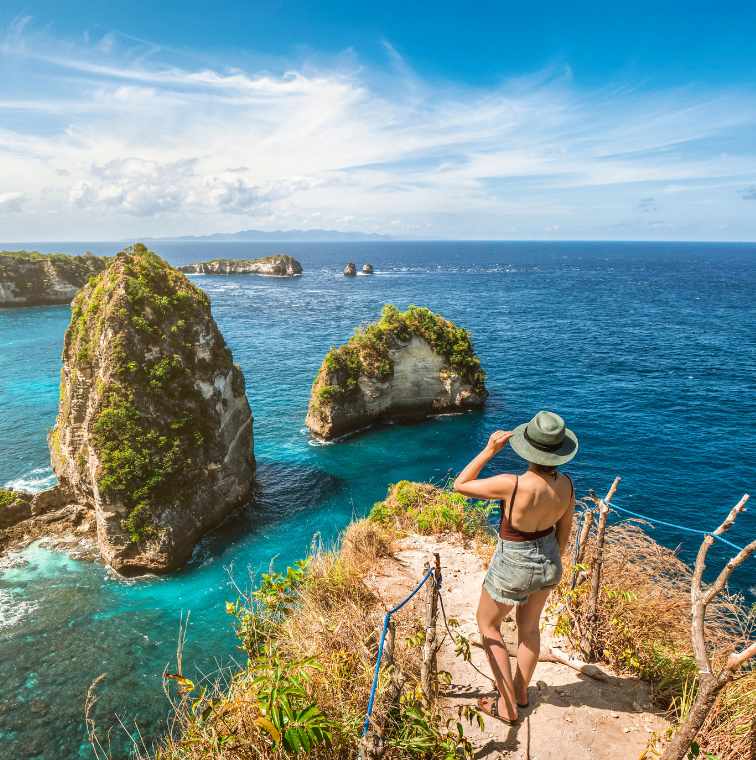
Bali’s location makes it a key transit point in Indonesia. The island connects Java to the eastern islands like Lombok and the Nusa Tenggara region. Administratively, Bali includes not just the main island but also Nusa Penida, Nusa Lembongan, Nusa Ceningan, and Menjangan Island. These smaller islands add to Bali’s cultural and ecological diversity. The province is divided into eight regencies, 53 subdistricts, and 674 villages.
Human Connection to the Landscape
While the geography is stunning, the human relationship with the land is what makes it even more special. Farmers cultivate the terraced fields using traditional methods passed down for generations. Villagers live in harmony with rivers, lakes, and volcanoes. Cultural practices, ceremonies, and daily offerings reflect gratitude for the natural world.
Places That Reflect the Landscape
Travel inland to Ubud or Sidemen and you’ll feel the cooler air and hear frogs singing after rain. In places like Kintamani or Batukaru, the jungle grows thicker, the land rises sharply, and the modern world feels distant. The landscape not only supports life—it shapes it.
Final Thoughts on Bali Island Geography
Bali Island geography reveals how nature and humanity are deeply connected. The mountains, rivers, reefs, and rice fields form more than a backdrop—they are part of daily life. Whether you’re exploring volcanic peaks or resting by a lake, every aspect of Bali’s land holds meaning. Understanding the geographical features of Bali adds depth to any visit, and reminds us that here, nature is never far away.