
Hinduism in Bali arrived over 2,000 years ago, brought by Indian traders and priests who introduced sacred texts, rituals, and philosophical concepts. What followed was a unique cultural blend, where ancient Balinese animist beliefs merged with Hindu traditions. As a result, this fusion created a distinctive spiritual landscape filled with ancestor worship, nature reverence, and daily rituals. Today, this spiritual legacy shapes Balinese identity and is visible in their temples, ceremonies, and way of life.
The Roots of Hinduism in Bali
Early Influence and Cultural Blending
The earliest forms of Balinese spiritual traditions were rooted in animism. When Indian Hinduism arrived, the Balinese didn’t abandon their beliefs—instead, they embraced both. Consequently, temples began to honor both Hindu deities and local spirits. Ancestors remained central, with rituals designed to maintain harmony between the seen and unseen worlds.
The Majapahit Empire and Balinese Hindu Identity
Hinduism in Bali gained deeper roots during the rise of the Majapahit Empire in the 13th and 14th centuries. This powerful Hindu-Buddhist kingdom from Java brought with it formalized temple architecture, court ceremonies, and the caste system. When the Majapahit declined due to the spread of Islam in Java in the 16th century, many Hindu nobles, priests, and artisans fled to Bali. As a result, their arrival transformed Bali into a stronghold of Hindu culture and religion. Even now, echoes of the Majapahit influence appear in Bali’s rituals, royal traditions, and language.
Unique Expressions of Hinduism in Bali
Daily Offerings and Ritual Practice
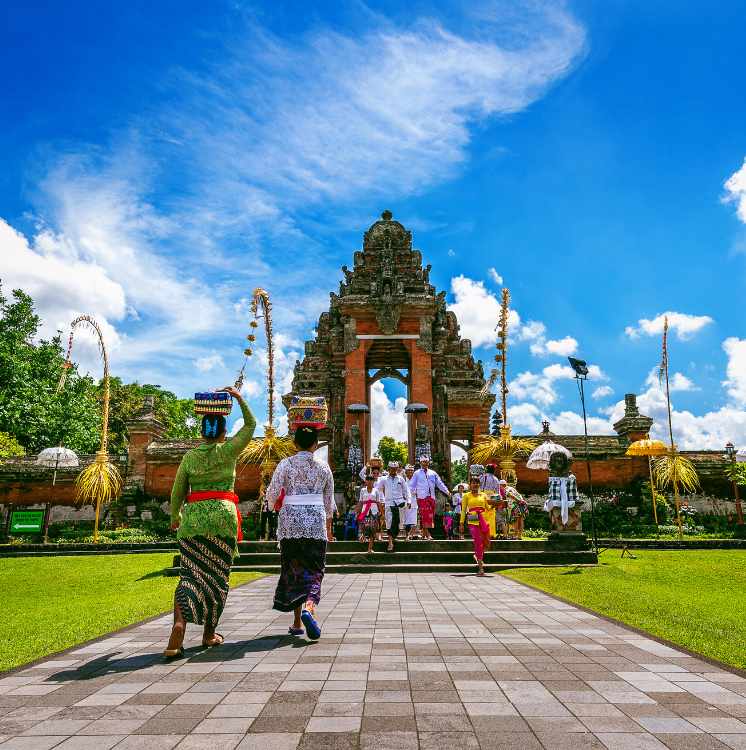
One of the most visible parts of Hinduism in Bali is the daily offering, or banten. These are small, handcrafted trays made from palm leaves, flowers, and sometimes snacks or incense. You’ll find them everywhere—in front of houses, shops, temples, and even on vehicles. Each offering expresses gratitude to the gods and invites protection and harmony into the space.
Unlike the temple-centered worship common in India, Balinese rituals are integrated into daily life. You don’t need to go to a temple to pray. Worship can happen at home, in a rice field, or even in a market. This intimate and regular practice helps preserve the sacred in everyday routines. Furthermore, these small rituals nurture a sense of spiritual mindfulness from dawn to dusk.
Temple Design and Bali Temple Rules
Bali temple rules and architecture are distinct from Indian styles. Balinese temples, called pura, are open-air structures that blend with nature. Built with stone carvings, tiered pagodas, and thatched roofs, these temples symbolize the harmony between the divine and the earthly world. Temple complexes are divided into three areas: outer (for preparation), middle (for gathering), and inner sanctum (for worship).
Visitors must follow specific customs when entering a temple. For instance, you must wear a sarong and sash, keep your voice low, and avoid stepping over offerings. These rules protect the sacredness of the space and reflect respect for both the gods and the community.
The Balinese Caste System
The Balinese version of the caste system, influenced by the Majapahit Empire, includes four groups:
- Brahmana: priests and spiritual leaders
- Ksatria: royalty and warriors
- Wesia: merchants and businesspeople
- Sudra: farmers and commoners (about 90% of the population)
Historically, this caste system played a significant role until the colonial period. Today, it no longer defines daily life or social structure. Instead, it remains a cultural relic. You’ll still notice caste influence in names—especially among the Sudra, where people often share names like Wayan, Made, Nyoman, or Ketut. Nevertheless, modern Bali values equality and community more than rank.
Rituals, Faith, and Symbolism
The Five Pillars of Balinese Hinduism
Balinese Hindus uphold five core beliefs:
- Belief in one Supreme God (Sang Hyang Widhi Wasa)
- Belief in the soul (Atma)
- Belief in karma (Karma Pala)
- Belief in reincarnation (Samsara)
- Belief in liberation (Moksha)
These beliefs guide rituals and life decisions. They influence how families honor ancestors, how communities conduct festivals, and how individuals seek balance between the spiritual and material worlds.
The Role of Myth and Storytelling
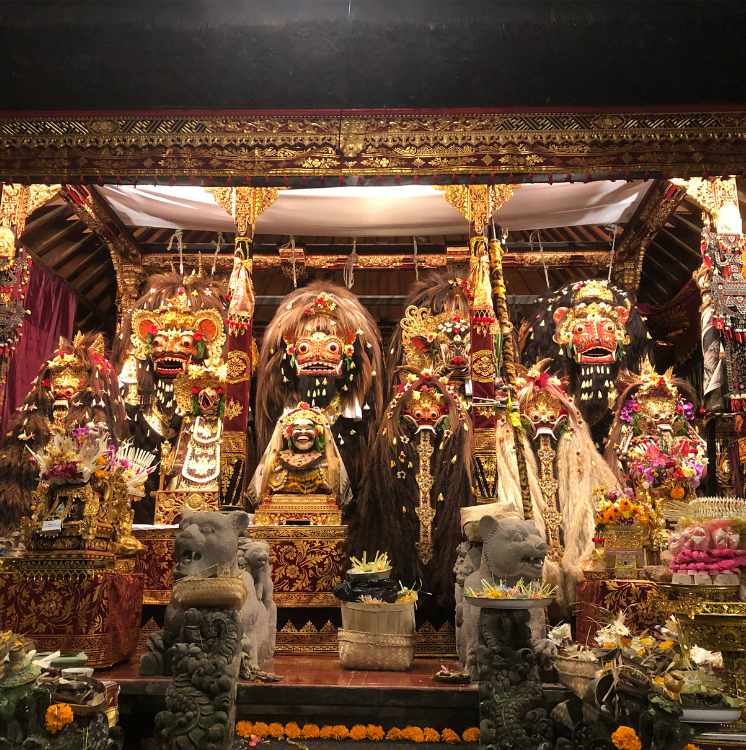
Stories shape Balinese spiritual traditions. Two iconic figures—Barong and Rangda—represent the eternal struggle between good and evil. Barong, the lion-like creature, symbolizes protection and positive energy. Rangda, the terrifying witch, stands for destruction and dark forces. Their symbolic battles, performed in dances and ceremonies, remind people to maintain spiritual balance in life.
The Ritual Calendar and Ceremonies
Balinese ceremonies follow both the lunar calendar and the Pawukon Calendar, a 210-day system unique to Bali. This intricate calendar schedules everything—from large temple ceremonies to small family rituals. It balances religious life with agricultural cycles and social duties.
Major rites include:
- Manusa Yadnya: human life-cycle ceremonies
- Pitra Yadnya: funeral and ancestor rites
- Dewa Yadnya: temple and deity rituals
- Buta Yadnya: appeasing dark spirits
- Rsi Yadnya: initiation of priests
Holy water, fire, rice, ash, duck eggs, and dab-dab leaves often appear in these rituals. They symbolize purity and connection to divine forces. Together, these elements bring meaning and depth to ceremonial life.
A Sacred Tradition that Endures
Hinduism in Bali is not just a religion; it is a way of life that shapes how people pray, work, eat, build, and relate to the world around them. Rooted in ancient Indian traditions but uniquely Balinese in practice, it has stood the test of time through adaptation and devotion. From the influence of the Majapahit Empire to the rhythms of the Pawukon calendar, from sacred dances to humble offerings, every element shows how deeply spirituality runs through the veins of Bali.
Travelers who come to Bali don’t just witness this heritage—they walk through it. Whether visiting a quiet temple, watching a ceremony, or simply stepping over a canang sari on the sidewalk, one becomes part of a living tradition.