
Kecak Dance Bali offers more than an evening performance. It brings together storytelling, tradition, movement, and powerful human voices in one unforgettable experience. For visitors, the show provides an engaging way to discover part of Bali’s cultural heritage while enjoying some of the island’s most beautiful settings.
Unlike many traditional performances, Kecak does not rely on a conventional orchestra. Instead, a group of male performers creates a rhythmic chorus of “cak” sounds. Their voices build the atmosphere as dancers act out scenes inspired by the Ramayana. As the performance continues, the story becomes more dramatic through movement, expression, fire, and changing light.
Moreover, the experience can suit many types of travelers. Families can introduce children to Balinese storytelling. Students can explore performing arts and local traditions. Meanwhile, companies can include the show in a Bali Corporate Retreat as a cultural activity that encourages connections and shared experiences.
So, where should you watch it?
From dramatic cliff-side stages to cultural spaces surrounded by greenery, Bali offers several places to experience Kecak. Here are five options worth adding to your itinerary.
The Enchanting Secrets Behind Kecak Dance
Before choosing a venue, it helps to understand what makes Kecak Dance Bali different from other traditional performances.
The performance developed from Balinese traditions connected to the Sanghyang ritual. In the 1930s, artist Wayan Limbak and German painter Walter Spies helped develop the theatrical form of Kecak that incorporates stories from the Ramayana. Today, the dance has become one of Bali’s best-known cultural performances.
The most recognizable element is the chorus. Dozens of male performers sit or move in a circle while repeatedly chanting “cak.” Their voices create layers of rhythm without the need for conventional musical instruments. Consequently, the sound itself becomes part of the storytelling.
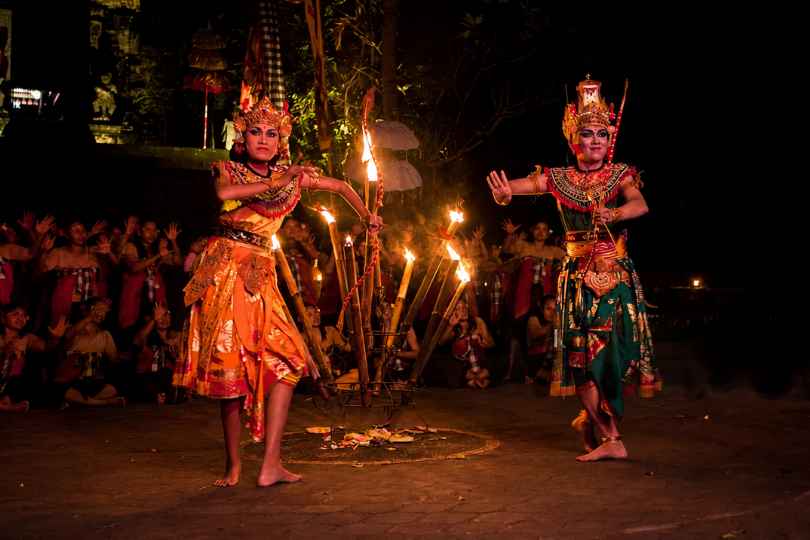
The performers also use gestures, expressions, and coordinated movements to help tell the story. Depending on the venue, the performance may include scenes involving Rama, Sita, Hanoman, and Rahwana. Furthermore, many evening shows include a fire dance. The combination of chanting, movement, fire, and darkness can create an especially dramatic atmosphere.
That makes Kecak more than something to watch. It becomes a Bali Cultural Experience that engages the senses and introduces visitors to a different form of storytelling.
Uluwatu Temple: The Iconic Sunset Kecak Experience
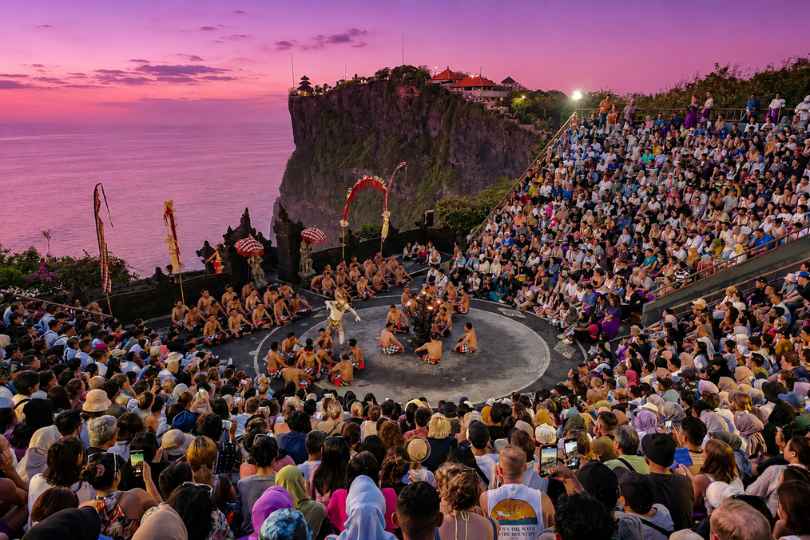
When people think about Kecak Dance Bali, Uluwatu often comes to mind first. Perched dramatically on the southwestern cliffs of Bali, Uluwatu Temple offers an extraordinary setting for an evening performance. The open-air stage overlooks the ocean, creating a natural backdrop that changes throughout the show.
The performance usually begins around sunset. Therefore, visitors can watch the sky shift from bright afternoon tones to orange, pink, and eventually deep blue. The changing scenery adds a natural sense of drama.
At the same time, the sound of the chanting creates an atmosphere that feels very different from a typical theater performance. The story commonly follows elements from the Ramayana. As the scenes develop, dancers portray important characters through movement and expression.
Another highlight comes when the fire element enters the performance. Against the darker evening sky, the flames create a striking visual moment. For travelers visiting Uluwatu Temple, combining the temple visit with Kecak creates an easy cultural itinerary. You can explore the temple area earlier, enjoy the coastal views, and then settle in for the evening show.
Why choose Uluwatu?
Uluwatu works especially well for first-time visitors because it combines three experiences in one outing:
- A famous Balinese temple
- Dramatic ocean scenery
- A traditional Kecak performance
However, the popularity of this venue also means it can become busy. Therefore, planning ahead can make the experience more comfortable.
GWK Cultural Park: Kecak Among Giant Limestone Cliffs
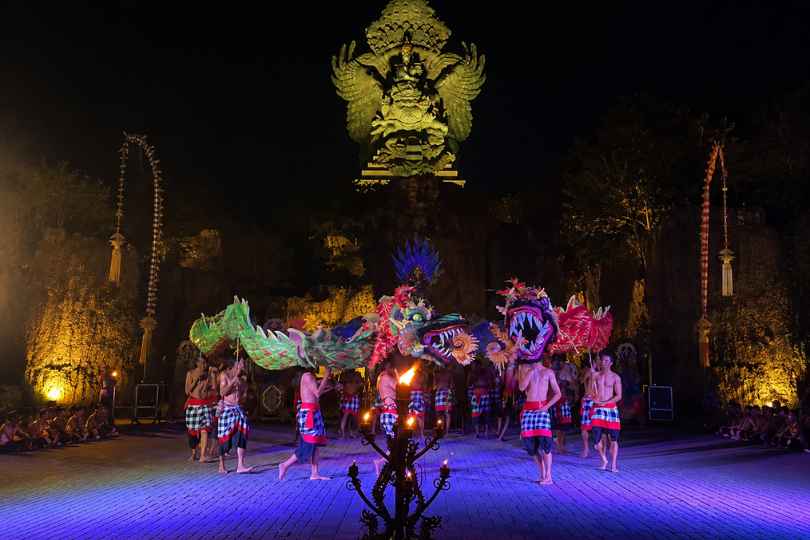
For another memorable setting, head to Garuda Wisnu Kencana Cultural Park in Ungasan. GWK combines art, culture, architecture, and large-scale attractions. The cultural park also features daily performances, including its Kecak Bali Dance show. The current official schedule lists Kecak GWK every day at 6 PM.
The setting gives this performance its own character. Instead of watching Kecak beside the open ocean, visitors can experience the performance within the expansive cultural landscape of GWK. The park’s enormous limestone formations and iconic cultural surroundings create a dramatic backdrop.
The current GWK presentation also connects the Kecak story with Garuda and Lord Wisnu, giving the performance a setting that feels closely connected to the park’s identity. Besides Kecak, visitors can explore other cultural performances and attractions throughout the park. As a result, it can work well for travelers who want to experience several activities in one destination.
A useful option for group travel
GWK can also work well for group itineraries. For example, a travel planner can arrange a visit during the afternoon before enjoying an evening performance. Groups can explore the park together, take photographs, and then gather for the show.
This format can be particularly useful for educational groups and corporate travelers who want to combine sightseeing with cultural learning.
Melasti Beach: Kecak With a Coastal Atmosphere
Melasti Beach offers another beautiful spot to experience Kecak Bali Dance. Located in Ungasan, the beach is known for its white sand, towering limestone cliffs, and scenic coastline. The destination also promotes Kecak performances as part of its cultural attractions.
The setting feels different from Uluwatu. Here, the combination of coastal scenery and an open-air cultural stage creates a more relaxed atmosphere. Visitors can spend time enjoying the beach before watching the evening performance.
The official Melasti website currently lists its Kecak Dance Titi Situ Banda performance as taking place every day, although visitors should check the latest schedule when booking because performance arrangements can change.
Why Melasti is worth considering to watch Kecak Bali Dance?
Melasti can be a great choice if you want to combine culture with a beach visit. You could spend the afternoon exploring the coastline, enjoy the surrounding scenery, and then stay for the evening performance.
For families and student groups, this also creates a varied itinerary. Instead of spending the entire day inside one attraction, participants can enjoy nature, photography, cultural learning, and a performance within the same area.
Tanah Lot: A Dramatic Cultural Evening
Tanah Lot is another well-known destination where travelers can experience Kecak. The temple sits on a rocky formation surrounded by the sea. Its coastal setting makes sunset one of the most popular times to visit.
Adding a Kecak performance can make the evening even more memorable. As the sun moves lower, the surrounding landscape begins to change. Meanwhile, the chanting and movement of the performers introduce another layer of atmosphere.
Tanah Lot is also a meaningful place for travelers who want to explore Bali’s spiritual landscape. The temple remains an important cultural landmark, so visitors should always follow local rules and dress respectfully.
Combine Tanah Lot with a cultural itinerary
Tanah Lot can work well as part of a western Bali itinerary. For example, travelers can explore nearby attractions during the day before arriving at Tanah Lot in the late afternoon. After enjoying the scenery, they can watch the cultural performance and continue with dinner afterwards.
This type of itinerary gives travelers a balance of sightseeing, culture, and leisure.
Ubud: A More Intimate Way to Experience Kecak Bali Dance
If you want to experience Bali’s cultural atmosphere beyond the southern coastline, consider Ubud. Known as one of Bali’s major cultural and artistic centers, Ubud regularly hosts traditional dance performances at different venues. Current local listings show Kecak performances at several locations across the area, with many beginning around 7:00 PM or 7:30 PM. Schedules can vary by day and venue.
This variety makes Ubud particularly interesting. Instead of having one single Kecak destination, visitors can find performances at different temples and community stages. Examples include Pura Dalem Ubud, Padang Tegal, Junjungan, Peliatan, and other locations.
The setting can also feel more intimate. Rather than a large tourist attraction, some performances take place within community or temple environments. Therefore, the experience can feel closer to the local cultural landscape.
Make Kecak Bali Dance part of an Ubud adventure
Ubud also makes it easy to build a full-day cultural and adventure itinerary.
During the day, visitors can explore rice terraces, art galleries, local villages, or enjoy outdoor activities such as cycling and Ayung River rafting. Ubud’s tourism information also highlights nature activities, wellness experiences, traditional arts, and cultural attractions.
Then, after dinner, you can finish the day with a Kecak performance. This combination creates a richer experience because travelers can discover several sides of Bali within one day.
Uncover the Elements That Make Kecak Extraordinary
Kecak stands out because of its unusual soundscape. There is no traditional gamelan orchestra driving the performance. Instead, the chorus of male performers creates the rhythmic foundation with their voices. The repeated “cak” sound can start softly. Then, as more layers join, it becomes increasingly powerful.
The chorus creates the atmosphere
The performers often sit in a circular formation. Their synchronized movements and voices help build tension throughout the story. For visitors, this can be fascinating because the human voice becomes the main musical element.
Fire adds another layer of drama
Some performances include a fire dance. The flames can transform the atmosphere once the sky becomes dark. However, visitors should remember that fire performances require careful preparation and trained performers. Guests should never attempt to recreate the activity themselves.
The Ramayana makes the performance easier to follow
The story provides a familiar narrative structure. Even if you have never watched Kecak before, you can often understand the basic conflict between good and evil through the characters, costumes, gestures, and expressions. That visual storytelling also makes Kecak suitable for audiences from different backgrounds.
Bring Bali Culture to Your Next Event
Kecak Dance Bali can offer more than a cultural show for holidaymakers. It can also become a meaningful activity for student groups, corporate retreats, incentive trips, and MICE programs. For students, watching Kecak provides an engaging way to learn about Balinese storytelling, traditional performance, the Ramayana, and local cultural values. Meanwhile, a Bali Corporate Retreat can use the performance as a relaxed cultural activity that brings colleagues together outside the meeting room. Rather than focusing only on formal sessions, companies can include Kecak as part of a wider cultural program alongside temple visits, village tours, cooking classes, or team-building activities.
Furthermore, Kecak works beautifully as entertainment for a gala dinner, conference, or corporate evening event, especially when organizers want to introduce guests to Balinese culture in an impressive setting. The powerful vocal rhythm, dramatic movements, traditional costumes, and fire performance can create a memorable atmosphere for both local and international guests. Therefore, whether it is part of a school trip, corporate retreat, incentive program, gala dinner, or conference, Kecak can turn a regular itinerary into a more engaging Bali Cultural Experience.
Tips for Watching Kecak Dance in Bali
A little planning can make the experience more enjoyable.
- Arrive early : Popular performances can attract many visitors, especially around sunset. Arriving early gives you more time to enter, find your seat, and enjoy the surroundings.
- Check the latest schedule : Performance times can change due to ceremonies, weather, special events, or venue arrangements. For example, Ubud’s performance calendar changes depending on the day and venue. Likewise, GWK currently lists its Kecak performance at 6 PM every day, but travelers should still confirm details when arranging their visit.
- Dress respectfully : When visiting temple areas, wear suitable clothing and follow local guidelines. Some locations may require visitors to wear a sarong or other appropriate attire.
- Respect the performance : Avoid talking loudly during the show. Also, keep your phone use under control so you do not disturb other guests or performers.
Most importantly, remember that Kecak is connected to Balinese cultural traditions. Enjoy the performance while showing respect for the people and places that preserve it.
Make Kecak Bali Dance Part of Your Bali Journey
A trip to Bali can be much more meaningful when you look beyond its beaches and resorts. Kecak offers an opportunity to hear traditional rhythms, follow a legendary story, and see Balinese performance art in memorable surroundings. At the same time, it can fit easily into different types of travel.
Families can enjoy it together. Students can learn from it. Couples can share a memorable evening. Meanwhile, companies can include it in a Bali Corporate Retreat as a cultural activity that brings people together. From the cliffs of Uluwatu to the cultural heart of Ubud, every venue adds its own character to the experience.
So, when planning your next Bali itinerary, leave room for something beyond sightseeing. Listen to the “cak.” Watch the story unfold. Feel the atmosphere. And discover a side of Bali that stays with you long after the performance ends.